If you’ve just started a care agency, or you have the capacity to support more people, you’re probably wondering how to get domiciliary care clients.
In general, there are two ways to get care clients in the UK: advertising to get private care clients, or tendering with the local authority to get domiciliary care contracts.
Private care clients will contact you directly. Your organisation will usually assess them, and you’ll decide what care they need. To get private care clients in the UK, you’ll generally need to advertise your care service in the local area.
Domiciliary care contracts from the local authority will usually guarantee your care service a certain number of hours a week or month. The local authority will tell you how many hours of care an individual needs, and what their care needs are. To get contracts for domiciliary care, you’ll need to go through the tendering process with your local authority.
In this guide, we’ll look at whether you’d prefer to target private clients or tender with the local authority, and how to get domiciliary care clients in both of those ways. We’ll explain what care seekers and commissioners are looking for, and how you can show that you’re the right care service for the job.
Quick quiz: private clients or council contracts?
Answer five quick questions about your service and we’ll point you to the growth route that fits best. Your answers stay on this page – nothing is saved or sent anywhere.
0 of 5 answered
1. How established is your care service?
2. What matters more for your cash flow?
3. Where would your time be better spent?
4. What does care funding look like in your area?
5. What’s your main goal for the next year?
Table of Contents
- Quick quiz: private clients or council contracts?
- Should I target private care clients or commissioners?
- Before you start looking for home care clients
- How to get private care clients in the UK
- How to get contracts for domiciliary care from the local authority
- How to show that you’re the best care service for the job

Should I target private care clients or commissioners?
Many care providers support both private and local authority clients. There are advantages and disadvantages to both options – let’s look at them in more detail.
Advantages of private care clients:
- You can set your own charges – often higher than local authority rates.
- You can avoid the complex local authority tendering process.
- You have more flexibility to reassess a client’s care needs and add hours or additional services.
- If you’re a new care agency, you might appreciate “starting small” with just a few private clients, rather than tendering for larger local authority contracts.
However, if you mostly target private care clients, you may need to spend a lot of time and money on advertising your care service. When clients no longer need your support, you might struggle to replace them.
As private care clients will pay your organisation directly, you may need to chase payments – or find that some clients don’t pay at all.
Advantages of tendering for local authority contracts:
- The local authority is a guaranteed payer – there’s no need to worry that they won’t settle their bills.
- The local authority will provide a steady stream of referrals. They will often guarantee your care service a certain number of hours per month.
The local authority will probably pay less per hour than private clients, though – and, depending on your location and charges, this could be significant. This is often the main reason that home care agencies choose to prioritise private clients.
Additionally, local authorities often have more onerous reporting requirements – and the tendering process is often more complicated than simply advertising for clients.
When you support local authority clients, you may also find that you have some limitations. The local authority will pay for a certain number of care hours, so that your team can provide the care that the client is assessed as needing. However, if your client wants extra support, such as companionship care, the council may not fund this. Clients or their families may need to pay additional top-up fees for additional services.
Book a free tour
Show families and commissioners you deliver
PASS tracks every care visit in real time and turns your records into one-click reports – evidence that wins tenders and reassures families.
👉 Get started with PASS
Before you start looking for home care clients
Before you work out how to get contracts for domiciliary care, make sure that you’re ready to provide care. If you’ve recently started a care agency, there are some things that you need to do before you can take on clients. You’ll need to have a care manager in place, hire care workers, arrange insurance and purchase equipment, and register your care agency with the CQC.
You should also write the necessary policies and procedures for your organisation, and set up your care management software, so that your records will be kept securely.
Find out more about starting a care agency, and what you should do to be ready for your first clients.
If your care agency is already up and running, and you’re simply looking to expand your client base, you should make sure that you’re providing a great service.
Ask yourself these questions:
- Do you have a CQC rating of Good or Outstanding?
- Are you able to handle the contracts you currently have, and keep your current clients happy?
- Do you have a big enough team to handle an increase in work?
- Do you have evidence of how effective your care is?
If the answer to those questions is yes, then let’s talk about how to get domiciliary care clients.

How to get private care clients in the UK
To get private care clients, you’ll need to advertise your care service. You can do this online, in print publications, via direct mail, or at community events.
Depending on your location and the services you offer, there are different places where you could advertise. If you’re new to the area, you might want to get advice from someone local – they’ll know what’s most effective in the town where you operate.
You could consider:
- Advertising in local papers and community newsletters
- Sending leaflets and flyers to homes in your area (also known as direct mail)
- Making sure that your care service is included in online care directories
Make sure that you have an accessible website, too. It should clearly explain what you offer and how prospective clients can contact you.
However, advertising isn’t the only way to get private care clients. Over time, you might find that you get new clients through word of mouth too. Current service users might recommend you to friends and family, and, as you develop a good reputation, other healthcare professionals might refer care seekers to your service.
Want more advice on getting private care clients? Download our ebook How to Get Home Care Clients and read our top 20 tips about how to grow your care service.
How to get contracts for domiciliary care from the local authority
The tender process may seem confusing at first, but if you want consistent and reliable care hours, domiciliary care tenders are the way to go. You’ll need to understand what the local authority is looking for and complete the tender process online, providing concrete evidence of your service’s effectiveness.
Your first step is to learn what type of contract your local authority uses when allocating care packages.
There are three main types of domiciliary care contract:
- Single-provider contracts: These give one care service full responsibility for all homecare in an area.
- Ranked frameworks: These give care providers a score, and then offer care packages based on that score. Care services with high rankings will be offered more packages.
- Dynamic Purchasing System frameworks: These allow care providers to see all of the available care packages, and bid on them individually. This is an ideal system for smaller providers, or teams that specialise in certain types of support, as you can decide which care packages are appropriate for your service before you bid.
Once you know what system your local authority uses, you can decide whether you want to tender for care contracts. You may decide that it’s not the right choice for your organisation. For example, if you’re a small care provider and your area uses single-provider contracts, you’re unlikely to be successful in tendering for local authority care packages.
How can I find opportunities to tender for care contracts?
Your local authority will usually advertise their tenders on their website, as well as on the government’s Find A Tender portal.
There won’t always be tender opportunities available, though. You should monitor these sites regularly, so that you don’t miss your chance to tender for contracts. You may also be able to build up relationships with local commissioners, who can let you know when tenders are due to go live.
How do I write a tender for domiciliary care?
Before you start writing your tender, make sure that you have all of your information available. You’ll need to provide evidence that you’re the right team for the job – and that means sharing specific figures and stories about your care service.
You should also read through your council’s commissioning strategy. Find out what they prioritise.
When you begin writing your bid, make sure that you’ve read the local authority’s specification. Answer the questions that are asked, and ensure that you’re covering everything listed in the brief. Give concrete examples, and include precise figures where possible.
Each tender will have its own requirements – make sure that your service meets them. You’ll need to have a Good or Outstanding CQC rating, but most other pre-requisites, such as a minimum turnover, will vary depending on the council or the contract.
Writing a good tender will take time, especially if you’re also trying to run a care service. Make sure that you’ve set aside enough uninterrupted time to write and review.
Finally, it’s important to submit your tender on time. If you miss the deadline, your submission will usually not be considered.

How to show that you’re the best care service for the job
Whether you’re looking for private clients or contracts from the local authority, you’ll need to prove that your service delivers great care. Both private clients and local authorities will want proof that you offer value for money, low staff turnover, and a good track record of safety. You should provide evidence that you deliver care on time, and that your team communicate well with clients and families.
What do private clients look for in a care service?
Care seekers and their families will want to know that your service is reliable and can meet their needs.
They’ll probably ask questions like:
- Will I have one or two consistent carers, or will I see different people every day? Clients want reassurance that they’ll receive care from familiar faces. Explain whether they’ll be allocated a particular carer, and what will happen if that person is unavailable. Need help preparing schedules? PASS’s rota and rostering software can help.
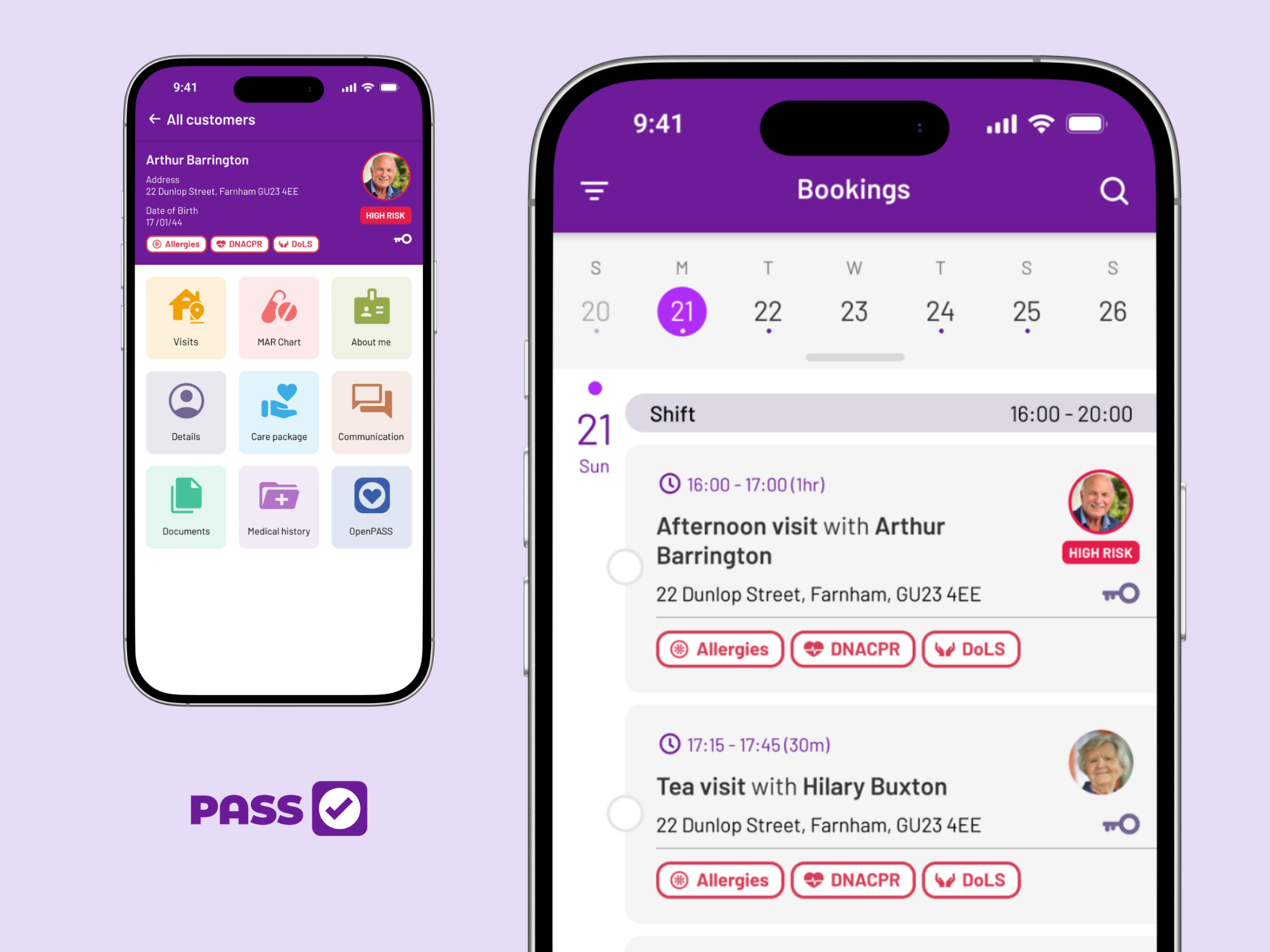
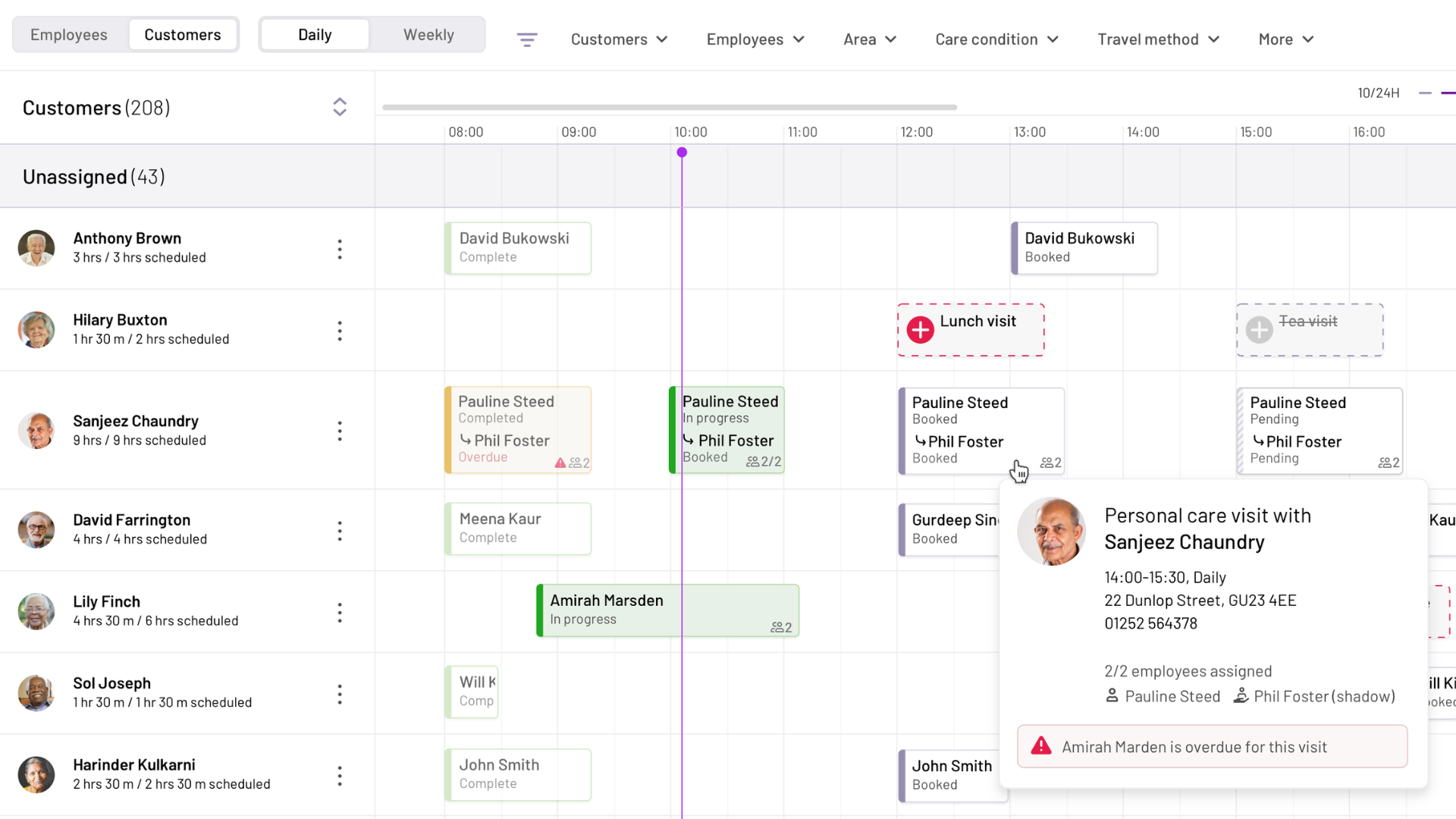
- Can we trust that carers will arrive on time? Potential clients are bound to be concerned about reliability. Using PASS home care software, you can track care visits in real time – offering valuable peace of mind for clients and their families.
- How do we communicate with the care team? Relatives will often want updates on their loved one’s health and care. With the openPASS family and friends portal, you can easily message authorised people and share details about care visits.
- What if my care needs change? You can explain how the care plan cycle works in your organisation, and let clients know that you can accommodate their needs if they change. However, you should be realistic about this – there may be services that you can’t offer.
You should also be upfront about your service’s costs. You may need to signpost potential clients to other services, too – for example, they may need help with arranging a financial assessment from the local authority, or advice from an occupational therapist.

What do local authorities look for in a care service?
You might think that local authorities will simply look for the cheapest care service. However, most commissioners will be looking for value – in many cases, they’ll put more weighting on the quality of the service that you provide.
Commissioners will also look for care services that have a positive effect on the local area. You should prove that you employ local people, get involved with community projects and events, and contribute to the town or village in some way.
Focus on showing that your care service has a good record of:
- Safeguarding
- Health and safety
- Meeting clients’ outcomes
- Responding quickly to concerns
- Punctuality
- Low staff turnover
- Working in partnership with other health and care providers
It’s important to have evidence of everything you claim in your tender. This is where care planning software can be vital. Over time, it can provide a great record of your care plans and risk assessments, incident reporting and alerts, staff compliance, and even financial details.
When you come to approach commissioners, your care software can make writing a tender submission much easier. You’ve got real-time evidence that you can use to prove that you’re the right care service for the job.
Book a free tour
Ready to take on more care clients?
PASS keeps rotas, care records and reports in one place, so your service can grow without losing control.
👉 Get started with PASS