If you want to take the next step in your career this year, starting a care agency might seem like the ideal solution.
Whether you’re an experienced care manager or want to make a complete career change, running a care agency lets you tackle new challenges and make a real difference to people’s lives.
In England, lots of home care agencies are small organisations. There are around 12,000 home care providers. Some are large companies, with multiple offices around the country, but many are much smaller.
They might have one care office, only support clients in a small area, and employ just a few care workers at a time.
In this article, we’ll look at what you need to start a domiciliary care agency, how much it costs, and what your first steps should be. We’ll also discuss some of the alternatives to starting a health care agency.

Table of Contents
What qualifications and experience do I need to start a care agency?
You don’t need any particular experience or qualifications to start a domiciliary care agency.
However, if you don’t have any previous social care experience, you’ll need to hire an experienced care manager.
Lots of people who own care organisations will have extensive health or social care experience. They might have started as a carer and worked their way up to being a care manager, before starting their own care agency.
However, other people might have other health or social care experience – perhaps they were a nurse, occupational therapist, or social worker.
Some people might have no professional health or social care experience at all. They may have worked in different industries, but noticed a gap in the market – perhaps if a friend or family member needed care.
All care service providers need an experienced and qualified registered manager, who will oversee the day-to-day activities. Even if you only support a few clients, if your organisation carries out a regulated activity, such as providing personal care, you must have a registered manager.
What experience does a registered manager need?
- Recent experience working in social care
- Recent and relevant care management experience – maybe they worked as a care supervisor, or have already been a care manager at another organisation
- An enhanced DBS certificate, issued less than a year ago
- Relevant qualifications, such as the QCF Level 5 Diploma in Leadership for Health and Social Care (Management of Adult Services), NVQ Level 4 in Leadership and Management for Care Services, or the Registered Manager’s Award
If you’ve never worked in care before, or don’t meet any of those requirements, you’ll need to hire a care manager.
Book a free tour
Ready to start your care agency with confidence?
See how PASS helps new providers set up care plans, stay compliant, and manage day-to-day operations from day one.
Free and no obligation!
Costs of starting a care agency
As you might expect, starting a care agency costs money.
Between insurance, care management software, registration fees, staff costs, and marketing, you’ll probably need to spend a few thousand pounds before you support your first client.
What costs should I expect when starting a care agency in 2026?
- Insurance
- Staff costs, including recruitment, background checks, training, and salaries
- Registration fees to the CQC
- Rent for business premises
- Purchasing equipment, such as PPE, stationery, phones and computers, and office furniture
- Home care software, to help with care planning, scheduling, recording care visits, and incident reporting
- Marketing, including setting up a website, flyers, newspaper ads, and social media advertising
In 2026, these startup costs could add up to between £3,000 and £15,000.

The first steps to starting a care agency from home
To start a care agency, you’ll need to register with the CQC, recruit staff, arrange the appropriate insurance, and market your service so that you attract clients.
You’ll also need to have appropriate policies and procedures in place, purchase equipment, and potentially rent business premises.
Let’s look at these steps in more detail.
Market research
Before you start any new business, you should do your research.
Is there genuinely a gap in the market in your area?
Look at other local or similar care agencies. What services do they offer? How much do they charge? This will help you come up with your business plan.
Create a business plan
Your business plan will set out some of the key details of your new care agency.
What sets it apart from other organisations, and what services will it offer? A business plan should include:
- A brief description of your care agency, including who you will support, and your mission and values
- Precise details of the services your organisation will offer
- Details of your market research
- Information about company directors and other key team members
- Your financial projections, including planned budgets and realistic revenue forecasts
- Your marketing strategy
- Your operations plan, or how the agency will run on a day-to-day basis
These points will help you assess whether starting a care agency is a viable business idea. Also, if you need to approach investors for financial support, a good business plan will be crucial.

Recruiting a care manager
If you don’t have relevant social care management experience, one of your first steps should be to hire an experienced care manager.
They can advise you during the setup process, and you’ll need them to be your CQC registered manager.
When you’re starting a care agency, you might already have someone in mind for the registered manager job, or you might need to advertise the role. You could do this yourself, or use a care recruitment agency to help you find the right candidate.
If you have worked as a care manager before, or have the relevant experience and qualifications, then you won’t need to recruit a separate registered manager. However, you may still want to hire another experienced care professional, so that you have support during the setup process.
Planning your policies and procedures
You and your care manager will need to prepare your organisation’s key policies and procedures.
These documents will explain:
- How you will ensure clients receive high-quality care
- How you will keep clients and colleagues safe from harm
- How you and other colleagues will carry out activities or react to situations
- How you will hire new staff members
At a minimum, you’ll need to write policies and procedures around safeguarding, medication management, health and safety, infection control, equality and diversity, whistleblowing, complaints, and data protection.
You will need to share these documents with the CQC as part of the registration process.
Your policies and procedures will need to be reviewed on a regular basis. You may choose to do this every year or two years – but, if legislation is updated before then, you might need to make updates ahead of schedule.
Arranging care management software
In 2026, most care agencies use care planning software to simplify their paperwork and ensure compliance.
Instead of using paper care plans, medication administration records, and incident reporting forms, everything is stored electronically. This helps you save physical space, and also ensures that your documents are kept secure.
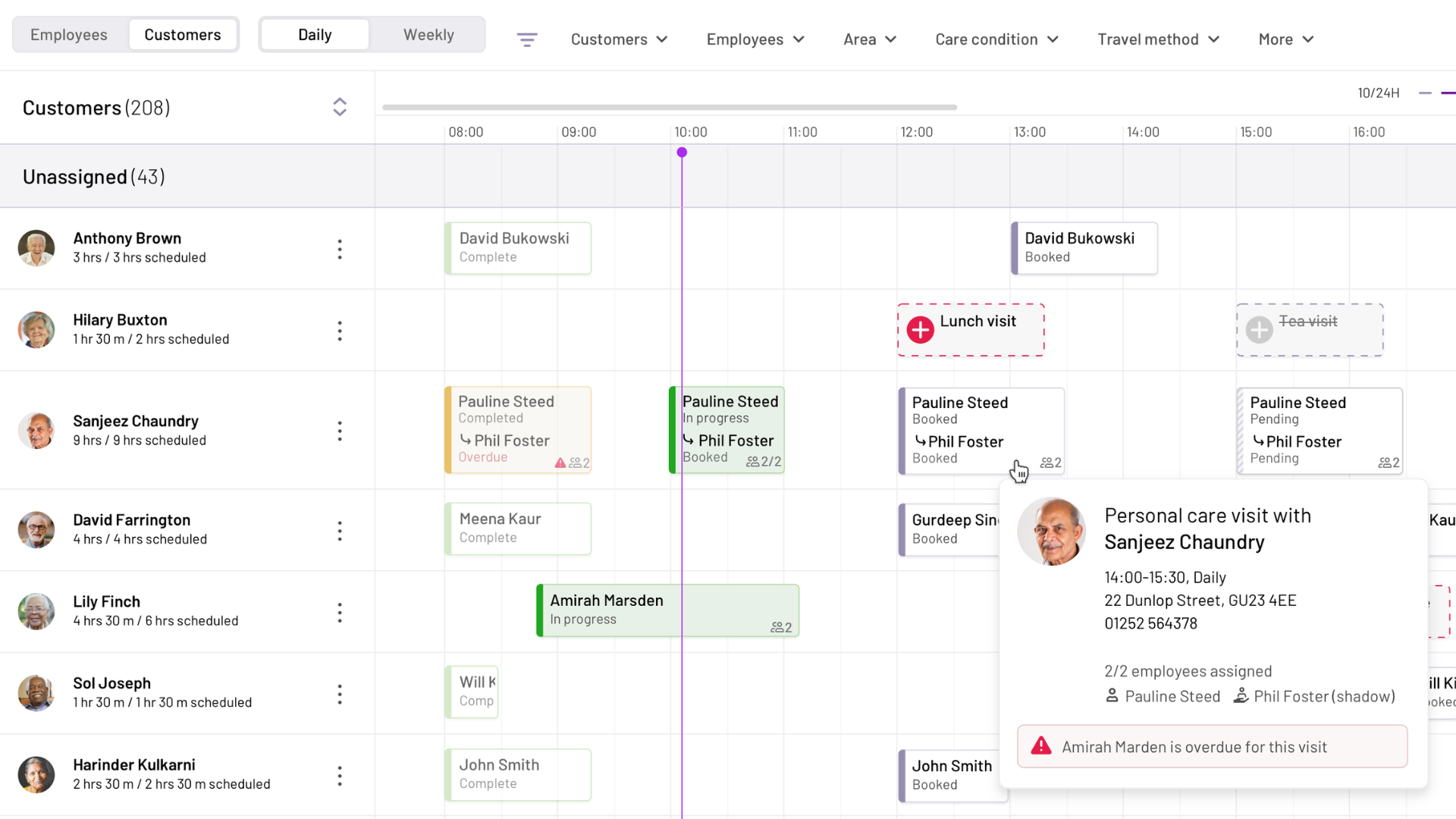
Care management software, like PASS, can help you with a range of recording, planning, and reporting tasks, including:
- Care planning and risk assessing
- Scheduling care visits
- Medication management
- Incident reporting
- Connecting with GPs
- Billing and invoicing
- Communicating with clients’ families
PASS can also create reports based on data you’ve entered, letting you see trends easily.
Purchasing and setting up your care management software early in the startup process can help you save time later.

Renting business premises
You might be planning to run your care agency from your home.
To do that, you’ll need a dedicated business space, where you can have confidential discussions with colleagues and clients, and safely store personal information. If you have an annex or several spare rooms that can be locked, you might be able to use your home as a base for your care agency.
However, if the CQC deem your premises inadequate, they can refuse your registration.
Rather than make significant changes to your home, you might find it easier to rent an office. Costs for this will vary, depending on your location.
Hiring staff
You’ll need to hire staff for your new care agency.
If you’ve never employed someone before, the gov.uk site has a comprehensive guide explaining how to get ready to employ someone for the first time.
Depending on your skills, and your organisation’s business plan, your staff team may include:
- Care workers, to deliver care
- A care co-ordinator, to schedule care visits
- An administrator or book-keeper
If you’re new to hiring, or want extra support, you may want to use a care recruitment agency to find the right staff team. They can help you advertise, shortlist candidates, and carry out background checks.
Once you’ve hired your new team, you’ll need to arrange training, and introduce them to your organisation’s policies and procedures.
Purchasing equipment
Every care agency will need some equipment.
When you support clients in their own homes, they will probably have their own mobility aids and other adaptive devices, but you’ll still need to provide your staff team with PPE and other required equipment.
Equipment to provide for carers will include:
- Gloves, aprons, eye protection, and any other necessary PPE
- First aid kits
- Phones, laptops or tablets so they can access your care management software
- A uniform and standard bag, if required
If you’re renting business premises, you’ll also need furniture and IT equipment.
Arranging insurance
All employers need to have employers’ liability insurance, and you must also make sure that you have public liability and professional indemnity insurance.
Additionally, you should insure your business premises and equipment.
However, some insurance providers might not provide cover for care agencies. Look for specialist providers who offer domiciliary care insurance.
As an employer, you can be fined £2,500 for each day that you don’t have employers’ liability insurance.
Registering with the CQC
When you’re ready to begin providing services to clients, you must register as a provider with the CQC.
When you tell CQC you are starting a care agency, you’ll need to demonstrate that you meet their regulatory requirements.
For example, are your care staff appropriately trained, do you have a suitable complaints policy prepared, and do you understand how to safely manage medications?
You’ll need to send a range of documents to the CQC to support your application, including many of your policies. New domiciliary care providers also need to explain how they recruited their directors and registered manager, and give some details about their market research.
As part of the registration process, the CQC may inspect your premises. They’ll also interview you and your registered manager.
You must wait until your registration is complete before you start to provide personal care to clients.
It is illegal to provide personal care, or carry out any other regulated activity, without being registered with the CQC.

Marketing your care service
Once everything is set up, you’ll need to find your first clients.
Consider how you’ll market your service to potential clients – will you send flyers to nearby homes, pay for adverts on social media sites, or take out an ad in the local paper?
Is it a good idea to start a care agency in 2026?
Care is a growing industry in England, as you can see from the latest social care statistics. In many areas, there is a lot of demand for home care providers right now.
If you’ve researched the market in your area, you’ll understand local demand. When preparing a business plan, you will have worked out whether starting a domiciliary care agency is financially viable for you.
However, before you decide to start a care agency, there are other questions to consider. Ask yourself:
- Am I comfortable managing other people?
- Am I comfortable with being ultimately responsible for all of my clients?
- Am I happy with the amount of admin work that will come with starting a care agency?
There is no right or wrong answer here. However, if you are uncomfortable with the these concepts, there are other options.
Alternatives to starting a domiciliary care agency
If starting a domiciliary care agency isn’t for you, there are alternative options.
Even if you don’t feel comfortable starting a new business from scratch this year, there are still ways to advance your career and help social care clients.
- If you want to choose your own clients but not employ other carers, you could become a self-employed personal assistant and support clients in the community. You would be directly employed by your clients, rather than working for a larger care organisation.
- If you don’t have a background in social care but want to be involved with a care organisation, you could look for admin or entry-level roles, or offer to share your skills and volunteer with a local care company. You may not want the responsibility of starting a care agency, but want to make a difference and support social care clients, and this is a way to do it.
- If you want to move away from hands-on care and be more involved in planning, scheduling and strategy, you could look for admin or management roles in other care organisations. You’ll have less autonomy than if you ran your own care agency, but you’ll gain experience in other aspects of social care – which will be helpful if you later decide that you do want to start a care agency.
- If you want to own a care agency, but don’t want to start from scratch with no support, you could purchase an existing care business or buy into a franchise. Buying an existing care business would allow you to take over their current client base and staff team. If you buy into a franchise, you’ll have the benefit of an established brand name, and often support from a head office team. However, these options are likely to be much more expensive, and you may have to navigate any on-going operational challenges.

Conclusion: starting a care agency
Starting a domiciliary care agency could be the next logical step in your care career.
If you’re an experienced care manager, or have noticed a gap in the market in your area, you could support clients and make a difference to their lives by starting a new business.
In many ways, now is the best time to start a care agency. The demand for domiciliary care is high, and compliance and paperwork are easier than ever before, thanks to care management software. You can easily communicate with clients and their families, and check that your care workers are providing high quality care.