As a care worker, you should be writing care notes during or after every care visit. Care notes help ensure continuity between carers, and can be a useful tool to spot potential concerns about a client’s health or behaviour.
Your care notes might be read by other care workers, supervisors and managers, clients and family members. They may also be read by CQC inspectors, and, in the event of a complaint or incident, they can help to protect you and your team by explaining your actions and giving an accurate record of what occurred.
In this guide, we’ll explain what care notes are, why you should write them, and what you should include. To help you get into the habit of writing concise and comprehensive notes, we’ll also share a few examples of daily care notes.
Table of Contents
What are care notes?
Care notes are a record of what has occurred during a care visit. They should be clear, concise, and include an accurate account of what happened while you delivered care to a client.
Your organisation might use paper care plans and notes, or you may use care planning software to write your notes online.
Digital care notes have some advantages over the paper version:
- They automatically include the carer’s name and a timestamp, so it’s much harder to forget to enter details or even to falsify records.
- They can be accessed anywhere by authorised users, so care teams can check details even when they’re not in the client’s home or room.
- They’re more secure than paper records – they can usually only be accessed with a passcode or biometric data, so you reduce the risk of unauthorised users seeing personal data.
- They’re easier to store, as you don’t need to find space for paper records.
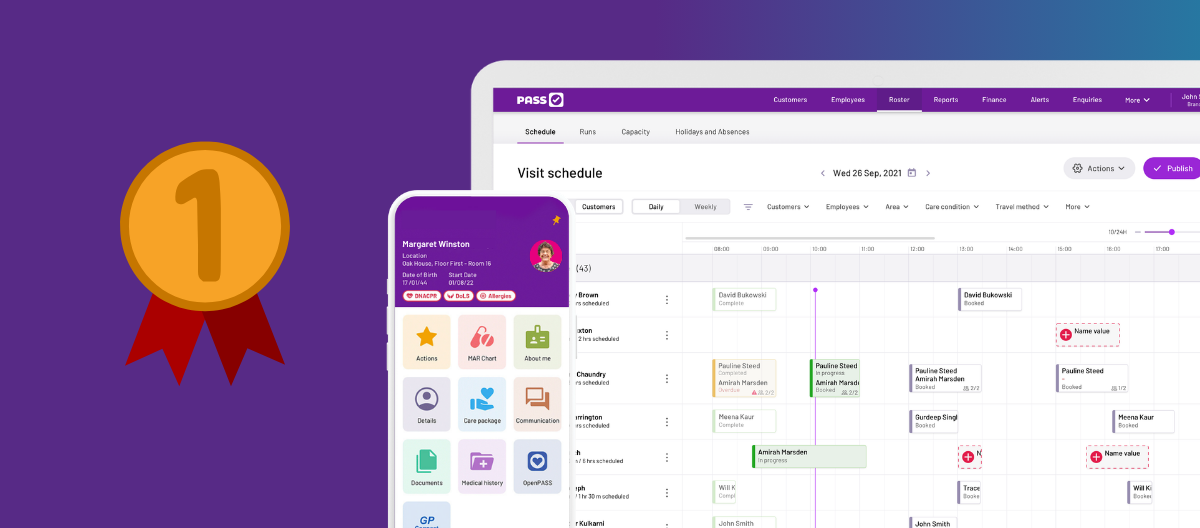
- Some digital care management solutions, like PASS, use AI features to summarise your care notes and spot potentially concerning trends in a client’s health and behaviour.
Additionally, the CQC encourages care providers to use good digital records systems.
Depending on your organisation, you may also hear care notes called nursing notes, daily care notes, or daily notes. You should follow your organisation’s guidelines on how you refer to them, but we’ve used the term care notes throughout this article.
Book a free tour
Write better care notes with PASS
Create clear, consistent records. Spot changes sooner. Build a complete audit trail that supports safer, more person-centred care.

Why should we write care notes?
Care notes are a legal requirement – CQC inspectors will expect to see them, and, if there is an incident or complaint, your notes may be a crucial part of an investigation. Depending on the situation, accurate and timely care notes can protect you, your colleagues, and your organisation as a whole.
Care notes are also a crucial way to communicate with other people who support your client and ensure continuity of care.
Good notes can help you:
- Spot changes in a client’s health, mobility, mood, or behaviour
- Decide whether a client needs additional support, intervention from other agencies, or a care plan review
- Share updates about a client
- Collect evidence about safeguarding issues or health concerns
This is especially important for people who deliver care in a client’s own home. Domiciliary carers might not see their colleagues often, so it’s much quicker and easier to discuss clients in writing. Lots of care organisations now use home care software, like PASS, to write up client notes. It’s a quick and easy way to communicate with colleagues in real-time, so you can keep on top of potential issues and concerns.
How to write care notes
When you’re writing care notes, you should include as much relevant detail as possible – while still making sure that they’re concise. You should also make sure that your care notes are written as soon as possible.
Your organisation may have its own policies and procedures about writing care notes. If you’re uncertain about how to record details about a client, ask your supervisor for a daily care notes sample from your organisation, so you can make sure that your notes include a similar level of detail and are formatted correctly.
When should I write care notes?
Write up your care notes as soon as possible – ideally, while you’re still with your client. This way, you can read through them with the client, and they can agree that they give an accurate representation of what occurred during the care visit.
Writing your care notes immediately also helps to reduce the risk of errors, because you should still remember all of the relevant details.
There may be times when you can’t write up your notes when you’re with the client. However, you should still make sure that you do it as soon as possible.
Even if you’re running late, make sure you write up your notes immediately – don’t skip writing them up to save time. Leaving note writing until later in the day may lead to errors in your notes, which may cause problems in future.
What should I include in my care notes?
Every care note should include:
- Exactly what occurred during the care visit, in detail
- Any future actions that should be taken as a result what happened during this visit
- The name of the carer or carers who delivered care
- The date and time of the visit
If you use care management software, your name and timestamps will usually be included automatically in your care notes. However, if your organisation uses paper care plans and note systems, you’ll need to make sure that you include these details every time you write a note.
Care notes should not include:
- Unfamiliar abbreviations or slang that other people may not understand
- Opinions, speculation, or judgements
- Vague comments
- Unnecessary details
Remember that your care notes may be read by clients, their families, and inspectors. In the event of an incident or complaint, your notes may be used as part of an investigation.

Examples of daily care notes
To make it easier for you to write good care notes, we’ve put together some examples. Our first examples are not quite right, but we’ve highlighted the problems, so you can see how they could be improved.
Our second set of examples are all good care notes, including the necessary detail and avoiding some of the most common pitfalls.
Remember, you should always follow your organisation’s internal policies when writing daily care notes. If you have questions about writing care notes, or are concerned that your clients’ notes don’t include enough detail, talk to your supervisor or manager.
Bad care notes examples
Visited John. Delivered care. He seemed fine. RL.
This daily care notes sample doesn’t provide enough detail. It doesn’t list what care was delivered to John, or include any specific observations about his health or wellbeing. It also doesn’t include the carer’s name, or the time and date. The abbreviation RL also isn’t clear – is the carer saying that they will return later, is it their initials, or does it mean something else entirely?
Ryan S: Helped Greg take medication. He was grumpy and ungrateful. He might be getting a cold.
This report includes a little more detail about the care delivered. However, it doesn’t explain what medication Greg took and when. The carer has included their name, but not the date and time. The example also includes some judgemental comments – instead of saying that Greg was “grumpy and judgemental”, they should report exactly why they think that. For example, did he display a particular challenging behaviour, or refuse to take his medication? The care worker should also explain why they believe Greg is developing a cold, rather than speculating.
Julie C, 03/06/2026 17.25: Anna had a nap after lunch from 2pm until 3.30pm. When she woke, I supported her to bathe and use emollient cream. She then wanted to watch TV. We watched the football and saw Liverpool win. She told me about how she used to play football with her sons, and her granddaughter is in the school team, but her grandson prefers tennis.
This report includes a lot more detail – and some of those details are useful, like the specific timings of Anna’s nap and the type of cream that was used. However, details of the conversation about sports aren’t necessary. Care workers can save time by omitting information that doesn’t relate to the client’s health, care, or wellbeing.
Good care notes examples
Surinder K, 02/06/2026 08.15: Lee had two slices of toast with peanut butter for breakfast and ate them all. I helped him back to his room and he chose his clothes for the day. Supported him to dress and clean his teeth, and asked him if he wanted a shave. He decided not to shave today. He was very talkative and is excited about today’s art class.
This daily care notes sample is appropriately detailed, and includes the carer’s name and a timestamp. It describes what care was delivered, explains that the client made a choice not to shave, and also details his emotional state.
Laura F, 05/06/2026 13:00: Maryam did not eat lunch today. She said she had a stomachache and felt sick. She did not want painkillers or heat pad. Provided water in easy reach, and helped her to lie down on her bed to rest. Have alerted care manager. Will monitor her at next visit, and call GP at 15:00 if no change.
This report includes a good level of detail. It explains why Maryam didn’t eat lunch, describes the actions taken by the care worker, and lists what should happen next.
5 tips for writing great care notes

Here are some of our top tips for writing clear, concise, and accurate care notes:
- Avoid using too many abbreviations and jargon: This can make your notes hard to understand. Your care notes might be read by your colleagues and CQC inspectors, but also clients and their families. They might not know what certain abbreviations mean, so it’s best to write words and phrases out in full where possible.
- Write them as soon as possible: This reduces the risk of forgetting crucial details. Where you can, read your notes through with your client while writing them, so they can agree that everything included is accurate.
- Include all the relevant details: Make sure that you explain exactly what occurred during a care visit. What type of personal care did you deliver? If you administered medication, what type and how much? If the client had a meal, what did they eat? How was their mood, and how could you tell? It’s also crucial to include your name, and the time and date.
- Report facts, not opinions: Avoid giving judgements about a client’s decisions or behaviour. For example, rather than saying that a service user was “rude” or “grumpy”, describe what happened. Did they refuse to take medication, shout, or avoid answering questions? You should also avoid speculating about a client. If they seem quiet, simply note that down – don’t suggest that they may have a headache or be depressed, unless you have other evidence.
- Use care management software to write your care notes: Care management software can make it quicker and easier to write up care notes. Your personal details and a timestamp should be automatically included, so there’s less to worry about including. Additionally, care management software is often more secure than paper care plans and notes – and authorised users can access it anywhere. If you use PASS, the PASSgenius feature will even let you summarise your care notes, and help you spot potentially worrying trends – so you can support your clients to be as healthy and comfortable as possible.
Book a free tour
Write better care notes with confidence
Capture meaningful information, track changes over time, and evidence care delivery with complete, accurate records in one place.