As a care provider, you should work to treat your clients and colleagues fairly. Discrimination in health and social care can affect the mental health of service users and care workers, and can even put people in danger.
Unfortunately, discrimination is a real problem in health and social care. Around three-quarters of staff members say they have received unfair treatment, and many clients have also been victims of discriminatory behaviour.
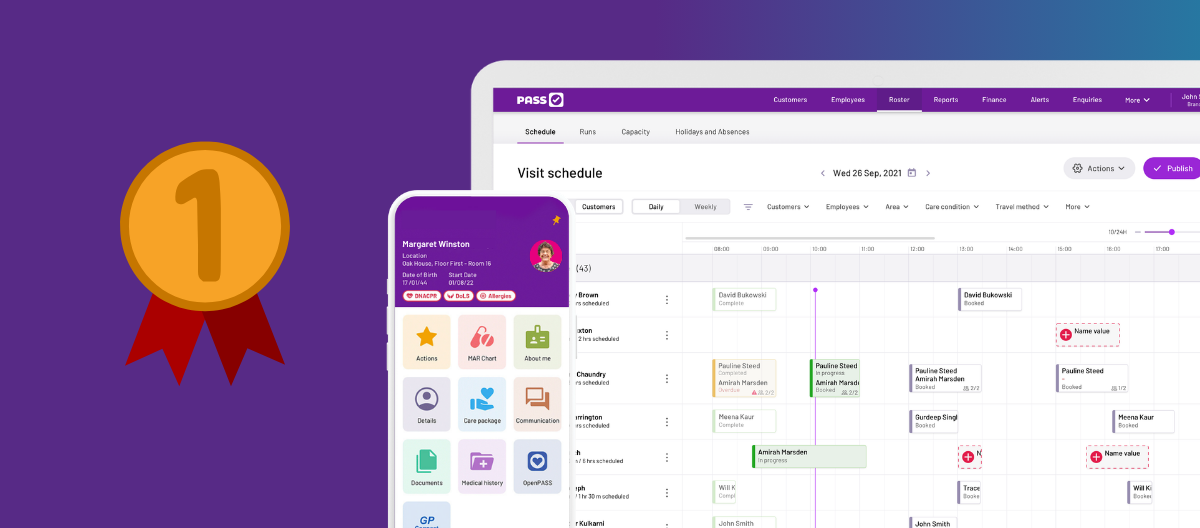
If your clients or staff members need reasonable adjustments to avoid being treated unfairly, care management software might help. You can use it to easily access information to better support them, such as details about their disabilities or health conditions, religious needs, or requirements for adjustments such as translators or large-print text.
In this guide, we’ll look at what discrimination means in health and social care, different types of discrimination, and how you can work to make sure that your care setting promotes anti discriminatory practice.
Table of Contents
What does discrimination mean in health and social care?
The definition of discrimination is when someone is treated unfairly. In the care sector, this might be a service user, member of staff, or even a visitor.
Discrimination is often illegal. In most cases, it’s against the law to treat someone unfairly because of certain protected characteristics.
The protected characteristics are:
- age
- sex
- sexual orientation
- disability
- gender reassignment
- marriage or civil partnership
- pregnancy or maternity leave
- religion
- race, nationality, colour, ethnicity, or national origin
Book a free tour
Want to support fair, respectful care for everyone?
Preventing discrimination starts with understanding individual needs, listening to people, and making sure your whole team follows the same approach.
PASS helps you record personal preferences, cultural needs, reasonable adjustments, and daily care notes in one place. So your team can deliver consistent, person-centred care and make sure everyone feels seen, heard, and respected.
Under the Equality Act 2010, we all have the right to be free from discrimination based on these characteristics.
Many people who engage in discriminatory behaviour do so unintentionally. They may not believe that they are acting in a way that disadvantages someone – or they might not see it as a problem. However, if you notice discrimination, you should speak up.

Different types of discrimination
There are several types of discrimination, and you might encounter any of them when working in health and social care.
Types of discrimination can include:
- direct discrimination
- indirect discrimination
- harassment
- retaliation
- discrimination by association
- discrimination by perception
Let’s look at these in more detail, and share some examples of discrimination in health and social care.
What is direct discrimination in health and social care?
Direct discrimination is where someone experiences unfair treatment because of a protected characteristic.
Examples of direct discrimination in health and social care:
- Tina has applied for a job at a care home and performed well during the interview. However, the hiring manager decides not to employ her because she is from a different ethnic background than the rest of the staff team. This is discrimination on the basis of Tina’s ethnicity.
- Matthew needs support to take medication. However, his carer does not always give him painkillers when necessary, because she believes men should have a higher pain threshold. This is discrimination on the basis of sex.
- A care home is running a trip to a local swimming pool, and has not invited any clients who are wheelchair users, whereas clients who can walk independently have all been invited. This is discrimination on the basis of disability.
What is indirect discrimination in health and social care?
Indirect discrimination is where an organisation has policies that put people at a disadvantage if they have certain protected characteristics.
Indirect discrimination in health and social care is often unintentional, and happens as a result of staff members relying heavily on outdated policies or procedures.
Examples of indirect discrimination in health and social care:
- Zainab struggles to read English. During her care assessment, the care manager gives her some forms to complete, each written in English. These forms are standard for everyone receiving care from this agency, but they do not offer access to a translator, or forms in another language.
- Andrew uses a wheelchair. He would like to visit his mother in her care home, but there are several steps to the entrance, so he cannot access the building.
- Gurdeep is a chef at a care home. A new manager tells him that the uniform policy states he must be clean-shaven. However, Gurdeep’s Sikh faith prohibits cutting or shaving his beard. Gurdeep’s manager tells him that he will be given a bad performance review for refusing to follow uniform policy.

What is harassment in health and social care?
Harassment is unwanted behaviour towards someone because of a protected characteristic.
This might be behaviour that creates a hostile, threatening or offensive environment for the victim, or behaviour that violates their dignity.
Examples of harassment in health and social care:
- Lee has recently come out as gay. His colleagues have started to ignore him in handover meetings, using slurs when talking about him, and making offensive remarks about gay people in front of service users. This is harassment on the basis of Lee’s sexual orientation.
- Jackie has MS and sometimes stumbles or trips when she walks. Other service users mimic this and laugh when she falls. This is harassment on the basis of Jackie’s disability.
What is retaliation in health and social care?
Retaliation, or victimisation, is where someone is treated poorly because they have made a complaint about discrimination or harassment.
The victim may have made the complaint themselves, or had a friend or family member complain on their behalf. Alternatively, they might have supported someone else in making a complaint about their own poor treatment.
Examples of retaliation in health and social care:
- Ann’s family have recently made a complaint on her behalf. The care manager relayed this complaint to the staff team, and now several carers refuse to provide care to Ann.
- Peter helped his colleague draft a letter of complaint when she was experiencing discrimination. Peter’s manager takes him aside and tells him that he is no longer being considered for promotion because of this.
What is discrimination by association?
Discrimination by association is where someone experiences discrimination because of their relationship or connection with someone who has a protected characteristic.
The person who experiences the discrimination may not have the protected characteristic themselves.
Examples of discrimination by association:
- Emily’s daughter is biracial. When a client sees pictures of Emily’s daughter, he asks for another carer to support him.
- Paul has taken time off work to care for his disabled partner. When he returns to work, he is disciplined, even though other colleagues with similar or even higher levels of absence have received no consequences.
What is discrimination by perception?
Discrimination by perception is where someone is discriminated against because someone believes that they have a protected characteristic.
Examples of discrimination by perception:
- Bernie has noticed that some carers treat her poorly. She discovers that these carers believe she is transgender. Although she is not transgender, this is still discrimination.
- Miriam performs well at interview, but the hiring manager chooses not to hire her because he thinks she might be pregnant. She is not pregnant, but this is still discrimination.
What is positive discrimination in health and social care?
Many organisations try to put anti discriminatory practices in place, and some may start with positive discrimination.
This is where they give more favourable treatment to people with certain protected characteristics – for example, choosing to employ a disabled person instead of someone without a disability, even if the disabled person is less qualified. However, positive discrimination is often unlawful, even if the person’s intentions are good.
Examples of unlawful positive discrimination:
- James is hiring a care supervisor for his agency, and he has many qualified applicants for the role. However, he decides to hire Ayesha, who does not have the relevant experience, because he wants to employ more staff members who are not white.
- Diane works in a supported living scheme and responds when service users push their emergency call buttons. She chooses to respond quicker to physically disabled clients, because she believes they are more likely to have a genuine emergency.
Is discrimination a problem in health and social care?
Unfortunately, discrimination and poor treatment is common in health and social care. Research by the Care Quality Commission (CQC) found that around three-quarters of health and social care workers had experienced discrimination.
Discrimination at work can affect your career – for example, being passed over for promotions or struggling to get a job at all. It can also impact your mental health. People who experience discrimination and harassment are more likely to develop depression and anxiety than the general population.
Service users can also be affected by discrimination in the health and social care sectors. For example, healthcare outcomes across the UK vary widely depending on ethnic background, according to research by the King’s Fund.
When clients are treated unfairly, they can be at serious risk of harm. Many service users, especially those with learning disabilities or who need complex care, are especially vulnerable and rely on their carers. When they are denied opportunities and services, they may not be able to speak up for themselves. Clients who experience discrimination or harassment may become isolated, and struggle with their mental and physical health.
How to ensure anti discriminatory practice in social care
As care providers, we have a responsibility to reduce discrimination in our organisations. Some ways that we can promote equality and diversity and reduce the risk of unfair treatment include:
- Looking at your recruitment process. This may include removing names and dates from CVs to avoid discriminating by age, gender, or background. You could ensure that each interview has multiple members of staff involved to reduce the risk of unconscious bias.
- Investing in staff training. Make equality and diversity training a priority. In addition, you could arrange talks or meetings with community faith groups, disability support groups, and other similar organisations, where people can share their lived experiences. Care management software can help you keep on top of training sessions and make sure that your team are all up-to-date.
- Focusing on person-centred care. During the care planning process, take time to learn about your clients. Find out about their backgrounds, beliefs, experiences, and needs, and how you can support them. For example, do they have any religious dietary requirements, and what name would they like to be called?
- Modelling and promoting inclusive behaviour. Ensure that you and your management team don’t engage in discriminatory behaviours. Make sure that you use respectful language, and encourage your staff to reflect on their own biases.
If you’re a care manager, you could invest in end of life care training for your team. For example, the Gold Standards Framework provides training for staff who deliver care to people nearing the end of their life.
How to cope with discrimination in health and social care
If you’re experiencing discrimination as a care worker, client, or visitor, it can be very upsetting. Everyone deserves to be safe at work or in a care setting. Being a victim of discrimination is not your fault.
What to do if you’re experiencing discrimination in health and social care:
- If you have immediate safety concerns or you believe that a crime is being committed, call 999.
- Talk to a friend, colleague, or family member, and tell them what’s happening.
- If you’re a member of staff, talk to your supervisor. You may be worried about retaliation after speaking up – if so, look at your organisation’s whistleblowing policy, and consider whether you would like to report the issue anonymously.
- If you’re a client or visitor, speak to a trusted member of staff, or make an official complaint. The care organisation should have a complaints procedure that you can follow, and you can also report the issue directly to CQC.
Conclusion: What is discrimination in health and social care?
Unfair treatment in health and social care is a real problem, with around three-quarters of all staff members saying they have been victims.
Whether you work in a residential facility or day centre, or provide support in a client’s own home, you’ll probably find that you work with people from different backgrounds, who hold different beliefs and have had different experiences to you. It’s important to treat everyone with respect, and to speak up if you notice discriminatory behaviour in your care setting.
Book a free tour
Make inclusive care part of everyday practice
See how PASS helps your team capture individual needs, share updates, and deliver care that treats everyone fairly, without adding extra admin.